
What is Parental Alienation?
Most children want strong, loving relationships with both parents. When a child begins rejecting a parent without legitimate cause, the consequences can be profound. This guide draws on Dr. Warshak’s research and experience to clarify what parental alienation is, how it develops, and how families and professionals can intervene.
At a Glance
- Parental alienation occurs when a child’s rejection of a parent is disproportionate to that parent’s actual behavior
- Severe alienation manifests across behavioral, emotional, and cognitive domains
- Most children of divorce want meaningful relationships with both parents
- Alienation must be distinguished from justified estrangement based on a parent’s conduct
- Multiple factors contribute to alienation, including favored-parent influence, family dynamics, and child temperament
- Early, appropriate intervention serves children’s best interests and helps prevent entrenchment


Overview
Most children whose parents live apart want meaningful relationships with both parents. In research studies, children often report that the most difficult aspect of divorce is not having enough time with their parents.
The parent with primary residential responsibility may have less time for the children after divorce because of work and household demands. At the same time, children are frequently dissatisfied with relationships that are limited mainly to weekend contact with the other parent.
Many kids prefer regular, ongoing contact with both parents. When asked about ideal arrangements, children—and adults looking back on their parents’ divorce—most commonly favor parenting plans that more evenly balance time between homes.
Some children, however, do not seek more time with an absent parent. Instead, they reject one parent, resist or refuse contact, or show intense reluctance to be with that parent. Distinguishing between reasonable rejection of a deficient parent and irrational alienation is essential to serving the child’s welfare.
What Is Parental Alienation?
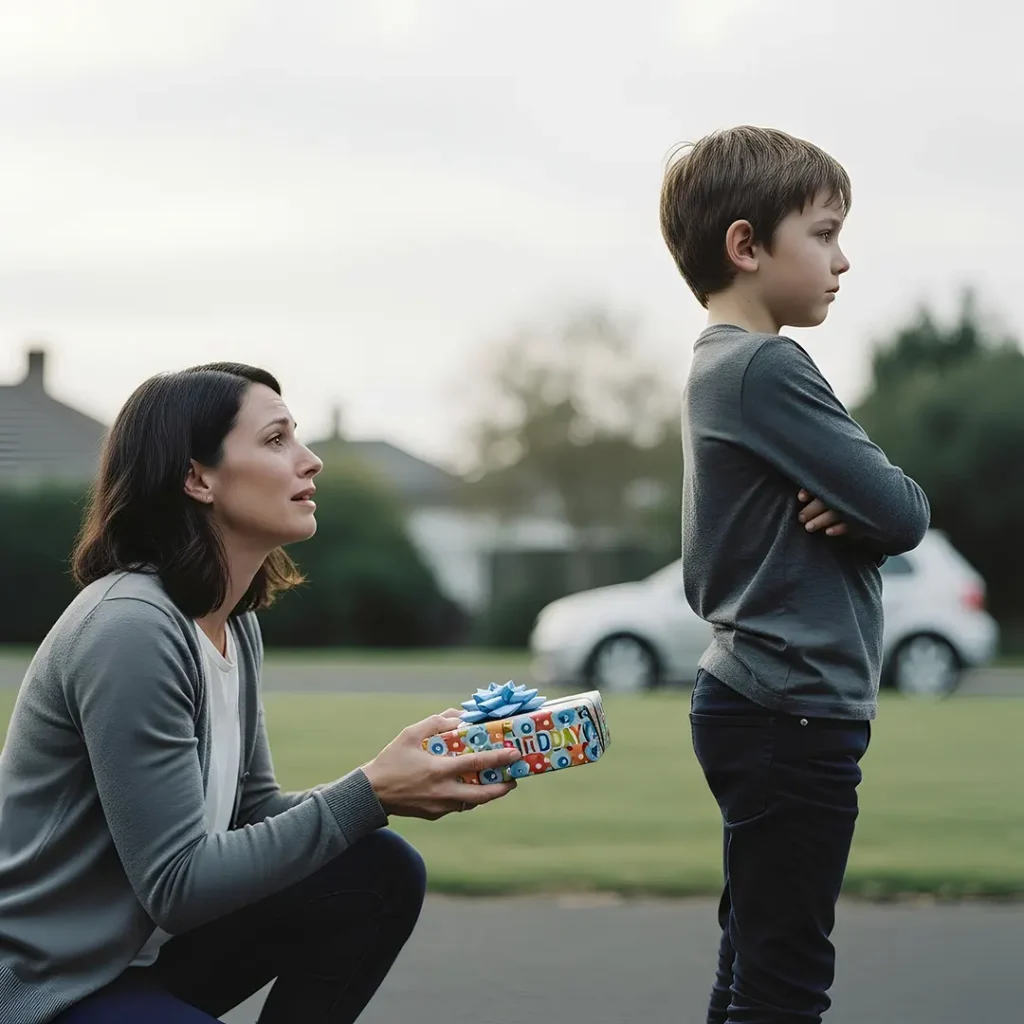
Parental alienation describes a child’s rejection of a parent that is disproportionate to that parent’s actual behavior and inconsistent with the prior history of the parent–child relationship. Children in this situation often once enjoyed a good relationship with the rejected parent but now adopt the other parent’s negative attitudes.
This phenomenon must be distinguished from justified estrangement. Some children have good reasons to distance themselves from a parent whose behavior has been harmful or unsafe. The critical distinction lies in whether the child’s aversion is rationally proportionate to the rejected parent’s conduct or reflects an irrational response fostered by other influences.
Parental alienation has important legal, clinical, and developmental implications. Courts, mental health professionals, and families need to understand this phenomenon to protect children’s basic need to love and be loved by both parents whenever it is safe and appropriate to do so.
Signs of Severe Parental Alienation
Severe parental alienation differs from mild or moderate forms in both the depth of the child’s rejection and the intensity of negativity toward the rejected parent. Severely alienated children hold highly polarized views. They have little, if anything, positive to say about the rejected parent and often rewrite their relationship history to erase positive experiences.
These children may seem content to avoid all contact with the rejected parent. They may extend their rejection to an entire side of the family and threaten to defy court orders for contact. The impairments typically span three interconnected domains: behavioral, emotional, and cognitive.


Behavioral Impairments
Severely alienated children often treat the rejected parent with extreme hostility, disobedience, defiance, and withdrawal. Their behavior may include resisting or refusing contact, vandalizing or stealing property, and threatening or perpetrating violence.
In one case described by Dr. Warshak, a boy told a custody evaluator that he would like to injure his father, kill him in his sleep, and have him die a horrible death. This level of venom is characteristic of children at the severe end of the alienation continuum.
A striking feature is that these children usually behave appropriately with other adults. The extreme behavior is directed almost exclusively toward the rejected parent and those associated with that parent.
This pattern contrasts sharply with physically abused children. Abused children typically fear the abusive parent and behave in an obsequious, respectful, and compliant manner to avoid provoking anger. They rarely display open defiance or contempt toward the abusive parent and often resist separation from that parent and seek reunification.
Emotional Impairments
When not treating the rejected parent with overt contempt, severely alienated children remain emotionally distant. They show no genuine love, affection, or appreciation. They may refuse to acknowledge occasions such as Mother’s Day or Father’s Day.
Despite conduct that greatly exceeds normal bounds of decency, these children show no apparent shame, guilt, or remorse for mistreating the rejected parent. Their emotional stance is not simply a matter of loving one parent more than the other. Instead, they experience a strong and irrational aversion toward a previously loved parent.
This aversion may take the form of fear, hatred, or both. Normal ambivalence and mixed feelings are replaced by rigid, negative emotion directed toward the rejected parent.



Cognitive Impairments
The thoughts and statements of severely alienated children about the rejected parent are often trivial, shallow, and inauthentic. Complaints may focus on minor or vague issues and are frequently expressed in language that echoes the favored parent, even when the child insists that the views are entirely their own.
When trivial complaints fail to achieve the goal of cutting off contact, some children and favored parents escalate to allegations of abuse. The child’s thinking about both parents becomes highly polarized. Positive memories of the rejected parent are suppressed, while negative perceptions of the favored parent are minimized or ignored.
Children may rewrite their history with the rejected parent to erase pleasant experiences. This pattern is the opposite of what is often seen in physically abused children, who tend to cling to positive memories of the abusive parent and maintain a positive image despite mistreatment.
Critical thinking is absent in these situations. The child reflexively supports the favored parent’s perspective in any disagreement. Some children ask to testify against the rejected parent or speak directly with the judge to advocate for the favored parent’s position in the litigation.
One particularly damaging pattern is “hatred by association.” The child’s anger extends to people and even objects associated with the rejected parent, including extended family members, therapists, and pets. Children may learn that they gain approval by echoing the favored parent’s criticisms. They recognize that displaying affection toward the rejected parent displeases the favored parent.
In some cases, children refer to the rejected parent by first name or with terms of derision rather than “Mom” or “Dad.” Although outside observers can often see that the child’s negative attitude developed in the shadow of the favored parent’s hostility, the child typically denies any such influence and blames the rejected parent for provoking the hatred, often with vague or disproportionate explanations.
Terminology and Clarifications
Alienation and estrangement are sometimes used interchangeably, but dictionary definitions distinguish them on the basis of contact. Alienated children show contempt and withdraw affection while still in contact with the parent, often not by choice. Estranged children are physically apart from the parent in addition to being emotionally distant.
Neither term, by itself, indicates whether the distance is rational, realistic, or reasonable. Within both categories, children vary in the degree to which their rejection is justified by the parent’s behavior.
It is important to locate each child on a continuum from rational to irrational rejection and to understand the relative contributions of each parent’s behavior. A child who feels closer to one parent, but still maintains a relationship with the other, differs markedly from a child who actively, harshly, and consistently rejects one parent.
Confusion also arises because alienation and estrangement can refer either to a state (noun) or a process (verb). Social alienation can describe a person feeling alienated from a group or the process by which that person’s behavior alienates the group. Similarly, parental alienation can refer to the child’s state of being alienated from a parent or to a parent’s alienating behavior—the actions that foster the child’s alienation. Context clarifies the intended meaning.
Ontario Justice Quinn adopted a straightforward dictionary-based approach:
“I point out that I am not concerned with ‘parental alienation’ as a psychological or a psychiatric term. My reference to parental alienation is merely factual and reflects the ordinary dictionary meaning of the words: ‘parental’ – ‘of, pertaining to, or in the nature of a parent’; ‘alienation’ – ‘the act of estranging or state of estrangement in feeling or affection.’”
Most of Dr. Warshak’s work—on this website, in Divorce Poison, and in Welcome Back, Pluto—addresses the category of children whose alienation is not reasonably justified by the rejected parent’s behavior and is not proportional to the child’s actual experience. In such cases, courts often determine that it is in the child’s best interests to spend time with the rejected parent and to repair the damaged relationship.

What Causes a Child to Become Alienated?
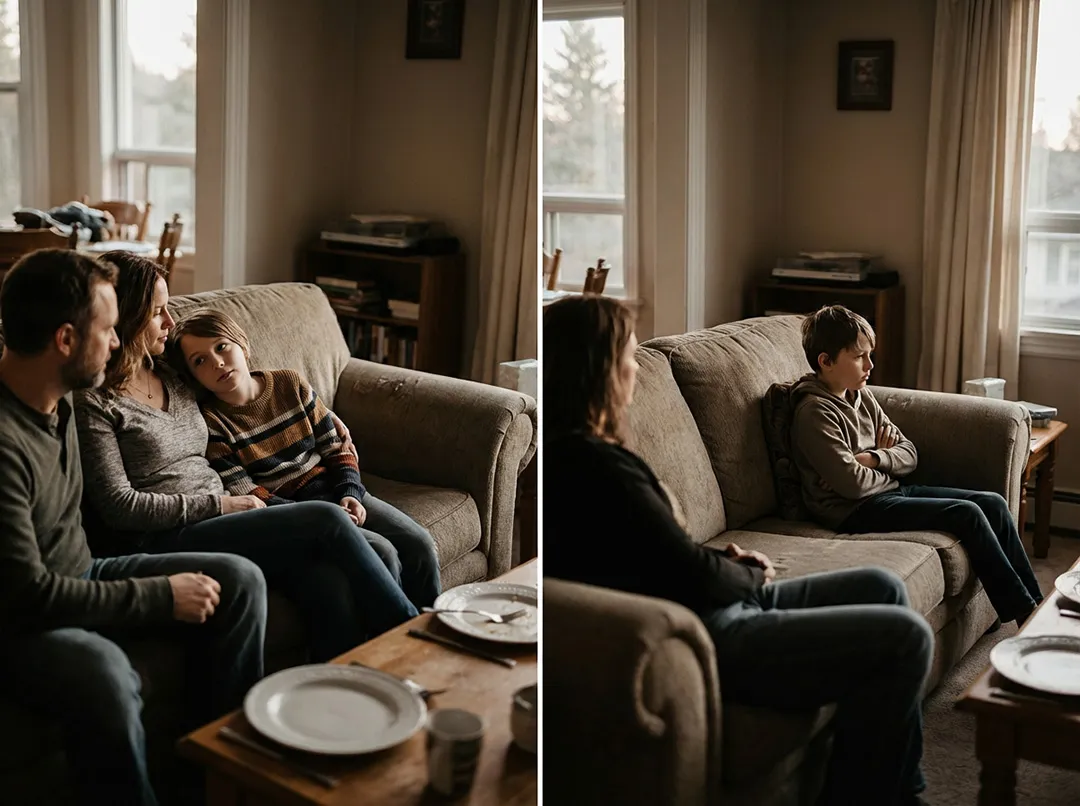
Childhood emotional and behavioral problems are rarely caused by a single factor, and parent–child conflicts are no exception. In cases of unreasonable rejection, the favored parent’s negative influence is usually the most visible ingredient. Other factors include features of the current and past family situation, the child’s temperament, and the rejected parent’s response to the rejection.
In some families, children may be especially inclined to align with a parent who has been historically less available or whose love seems more tenuous and dependent on “loyalty,” defined as adopting that parent’s negative views of the other parent.
With few exceptions, when children relate well to one parent but irrationally reject the other, they have absorbed the favored parent’s negative perspective. Without the favored parent’s cooperation with, approval of, or encouragement of the rejection, the conflict typically would not develop into severe and persistent alienation.

The Role of the Favored Parent
Most parents feel hurt and anger when a relationship ends. Many manage these emotions in ways that protect their children from adult conflict. Others struggle to do so consistently.
Some parents become so focused on their own pain, anger, or wish to punish a former partner that they lose sight of their children’s need for healthy relationships with both parents. Some believe that they are the clearly superior parent and that the children can do without the other parent altogether.
In these situations, parents may, deliberately or not, enlist children as allies against the other parent. Through repeated bad-mouthing, exaggerations, selective attention to negatives, and ignoring positives, they teach children to share their hostility. Over time, this can effectively erase the other parent from the child’s life and leave the child feeling safe giving and receiving love with only one parent.
Children who internalize these messages often develop the behavioral, emotional, and cognitive difficulties described earlier. They pull away from a formerly loved parent—and often an entire extended family—leaving rejected relatives puzzled about what they could possibly have done to warrant a complete rupture.
When such patterns are deliberate and result in—or have the potential to cause—significant psychological harm, mental health professionals regard this as a form of child psychological abuse.
The Role of the Rejected Parent
Some rejected parents lose their temper with a child who refuses communication or interacts only with contempt. It is important to distinguish between a longstanding pattern of mistreatment and isolated lapses of judgment, and between behavior that helps cause alienation and behavior that reflects a desperate, inadequate response to it.
It is also important to avoid assuming that all children who reject a once-loved parent do so solely under the influence of the favored parent. Some children reject a parent whose conduct genuinely warrants caution or distance—although, as Dr. Warshak notes, many abused children cling tightly to their abusers rather than rejecting them.


Complexities and Misdiagnosis
Not every child exposed to alienating behavior becomes alienated. Some, with considerable diplomacy, manage to maintain warm feelings toward both parents despite pressure to choose sides. Some children reject the parent who pressures them to align, rather than the targeted parent.
Many strands shape parent–child relationships: remarriage, stepfamily dynamics, developmental stages, temperament, and early responses to conflict and alienation. In the interest of avoiding simplistic explanations, these factors must be considered. At the same time, we should not overlook or excuse the cruelty of teaching children to hate those who love them.
Alienation can become firmly entrenched when children are given undue power to dictate the terms of contact with a parent, especially when that power is reinforced by court orders or parental acquiescence. Conversely, problems can sometimes be contained when courts make clear that irrational avoidance of a parent, supported by the other parent, will not be accepted.
When Intervention Is Needed
When a child’s alienation is not reasonably justified by the rejected parent’s behavior and is disproportionate to the child’s actual experience, early intervention is in the child’s best interests. The longer severe alienation persists, the more difficult it becomes to repair the relationship.
Courts carry a responsibility to protect children’s welfare, which includes safeguarding the opportunity for healthy relationships with both parents whenever this is safe and appropriate. Appropriate responses may include:
- court orders that support repair efforts and reduce exposure to alienating influences
- forensic evaluations to clarify family dynamics
- consultation with professionals experienced in parental alienation

Tips for Parents and Stepparents
Here are several videos featuring advice from Dr. Warshak. On this site you will also find professional articles including discussions of misdiagnosis, rational versus irrational rejection, and best practices for assessment and intervention in alienation cases.
Holidays in Divorced Families
When Divorced Parents Move
Summer Visits with Other Parent
Step Families Part 1
Step Families Part 2
Resources and Further Reading
For those seeking more detailed information on parental alienation:
Divorce Poison provides a comprehensive guide for parents and professionals on recognizing, preventing, and responding to alienating behavior. Welcome Back, Pluto offers an accessible educational program for children and families facing alienation.
Parents and professionals seeking consultation or forensic services can learn more about available options.