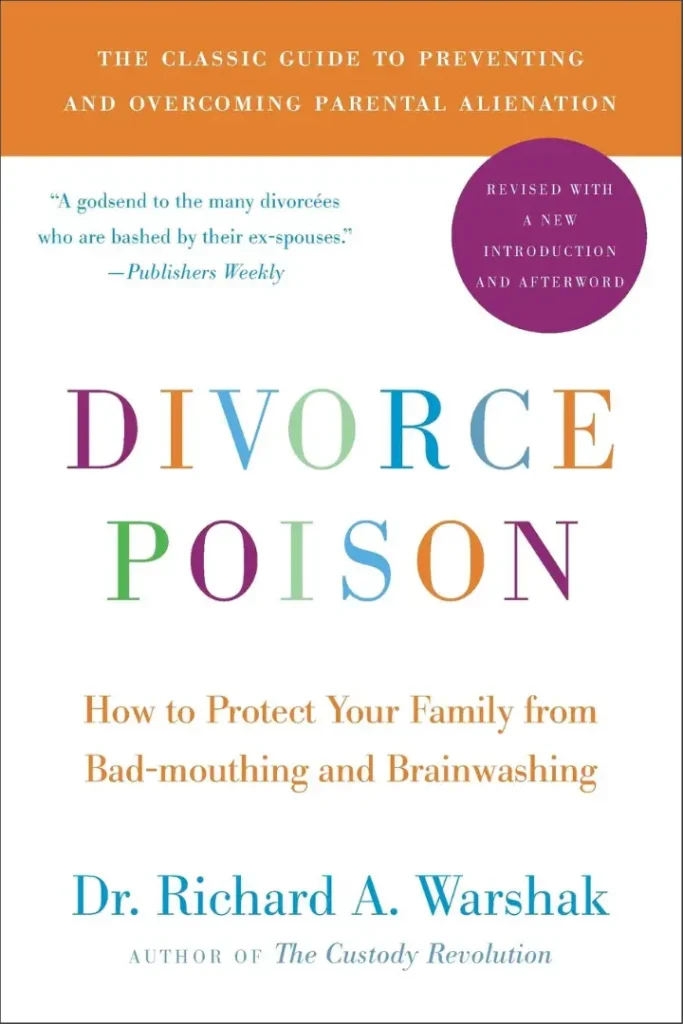
Divorce Poison
Divorce Poison is a practical, research-informed guide for protecting children from bad-mouthing, pressure to “choose sides,” and the family dynamics often called parental alienation. It focuses on what parents can do—without escalating conflict—to preserve and rebuild healthy relationships.
Why this book exists: Doing nothing can feel “safe,” but it often leaves children caught in the crossfire and parents feeling helpless. This book offers a clearer blueprint for responding constructively.
What you’ll learn
Key takeaways—kept concise and practical.
How bad-mouthing affects children
Understand the emotional impact of ongoing criticism, subtle pressure, and loyalty conflicts—and why it can distort a child’s view of a parent over time.
How to respond without escalating
Learn clear, non-reactive responses when children repeat accusations, act disrespectfully, or refuse contact—so you don’t “feed” the conflict.
How to protect the relationship
Practical strategies to strengthen the parent–child bond, reduce “all-or-nothing” thinking, and keep connection alive—even under pressure.
How to rebuild after distance
Guidance for repairing trust and reconnecting after extended estrangement, including how to move forward without forcing children to pick sides.
This book also covers
- How and why manipulation happens—and how to recognize common patterns
- How to respond to false accusations (including “brainwashing” claims)
- How to choose (and work with) the right therapist and legal support
- How to notice and correct your own unhelpful responses under stress
Who this is for
Common audiences who use Divorce Poison as a starting point.
Note: This resource is educational and not a substitute for psychotherapy, diagnosis, or clinical treatment.
Get the book
Links open on third-party retailer sites in a new tab.
Divorce Poison
Available in multiple formats depending on retailer availability.
Retailer pages and availability may change over time.