
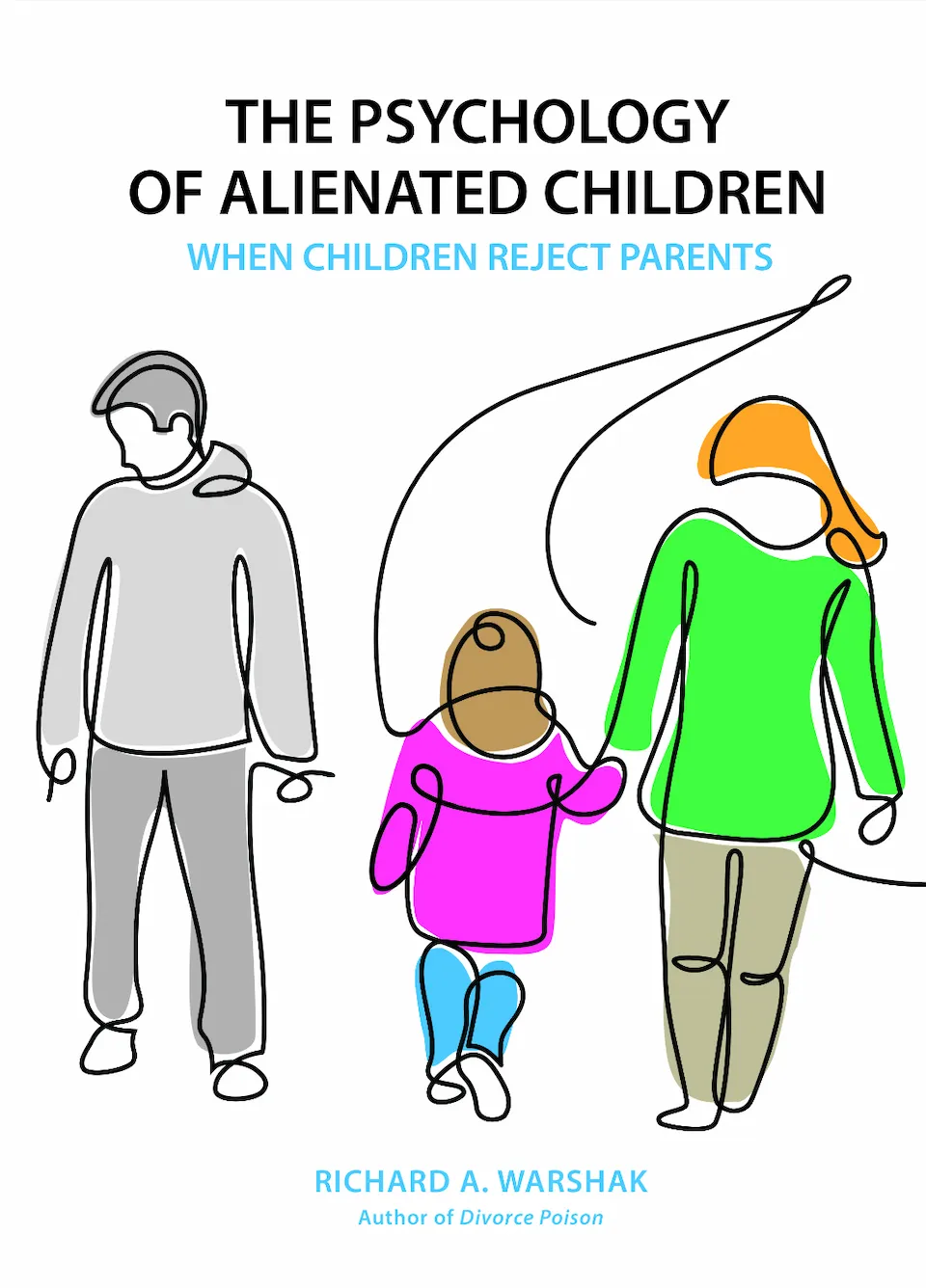
The Psychology of Alienated Children
The long-awaited follow-up to Divorce Poison, this book distills five decades of research and clinical experience into a clear, research-grounded examination of parental alienation—how it develops, how it becomes entrenched, and how children and families can be helped to heal.
Written for parents and professionals alike, The Psychology of Alienated Children offers careful evaluation frameworks, practical guidance, and evidence-based insights for navigating some of the most complex and emotionally charged cases in family life.
What you’ll learn
Core ideas and practical takeaways from The Psychology of Alienated Children.
Why alienation takes hold (and what’s often missed)
Learn what can trigger parental alienation—including a potent, commonly overlooked factor—and how alienation can become entrenched when intervention is delayed.
How to evaluate claims and counter-claims
Clear guidance for assessing when a rejected parent’s behavior is being wrongly blamed, how to identify false accusations, and how to evaluate the behavior of an alienating parent.
How to assess the child’s presentation
Includes seven criteria for evaluating whether a child is alienated from a parent, plus research-grounded frameworks for understanding what you’re seeing and hearing.
How cases can be handled more effectively
Practical tips for lawyers, litigants, and judges—highlighting common pitfalls, helpful decision-making approaches, and ways to reduce professional and personal risks in high-conflict cases.
Highlights include
- The most potent—yet often overlooked—trigger of parental alienation
- The landmark study of children who overcame severe alienation
- How to assess when a rejected parent is wrongly blamed for alienation
- Seven criteria for evaluating whether a child is alienated from a parent
- How to evaluate behaviors of an alienating parent
- How to identify false accusations of parental alienation
- Benefits and hazards of involving children in custody disputes
- The science behind parental alienation concepts
- Why postponing treatment often entrenches alienation (college-student study)
- Tips for lawyers and litigants on either side of a case
- Tips for judges on managing alienation issues effectively
- Professional & personal hazards—and strategies to reduce risks
How the book is organized
A practical structure designed to connect research to real-world decisions.
Chapter introductions & commentary
Each of the fifteen chapters begins with context-setting commentary and behind-the-scenes perspective, including reflections on how the ideas can influence practice in courts and clinical work.
Epilogue: five decades distilled
Concludes with an Epilogue that distils decades of study into clear insights—clarifying terminology, deepening understanding, and pointing toward new paths for helping children and families heal.
Who this is for
Written for parents and professionals working to protect children from becoming casualties of conflict.
Note: This resource is educational and not a substitute for psychotherapy, diagnosis, or legal advice.
Publication & availability
Retail links will be added when publication details are finalized.
The Psychology of Alienated Children
Scheduled for publication in 2026. Check back for retailer availability.
In the meantime, you can start with Divorce Poison.